
SYSTEM R AI
AGENTIC TRADING OPERATING SYSTEM
Everything a trader and an agent needs. One system. Programmable execution, probabilistic risk management, and complete audit trail.
OPERATING ENTITY
System R Technologies LLC
Florida, USA
TOKEN ENTITY
OSR Protocol Inc.
BVI No. 2204362
NETWORK
Solana Mainnet
Live, token deployed
The Problem
Trading infrastructure was designed for humans. Agents need a different architecture.
Agents cannot hold bank accounts, sign payment agreements, or interact with traditional billing. They can hold tokens and execute onchain transactions. The settlement layer must be native to how agents operate.
Existing platforms provide no risk architecture. Return volatility that exceeds system risk containment capacity produces terminal drawdowns. This has been empirically validated.
No audit trail exists for machine-executed decisions. When an agent sizes a position, routes an order, and closes in milliseconds, the reasoning chain must be provable.
Why Now
Three structural shifts are converging. The window is open.
AI Agents Are Trading
Autonomous agents are executing financial operations at machine speed across multiple strategies simultaneously. They need infrastructure, not dashboards. The tooling layer beneath them does not exist as a product.
Tokenised Compute Is Proven
Helium, Render, and Akash proved that burn-and-mint equilibrium tokens can reach billion-dollar market caps by tying token demand to real infrastructure usage. The model works. It has not been applied to financial execution.
Capital Is Moving Here
77% of AI agent transaction volume runs on Solana. 40% of every crypto VC dollar in 2025 went to AI. $3.1B deployed in March 2026 alone. The category is forming now.
The Solution
A complete trading operating system. 10 layers. Broker agnostic. Market agnostic. Every qualifying LLM.
System R AI — The Platform
10 operational layers working as one: identity, intelligence orchestration, probabilistic risk management, planning, execution routing, data, analysis, memory persistence, compliance, and operations.
Broker agnostic. Market agnostic. Any asset class.
Every qualifying LLM. Claude, GPT, DeepSeek, Gemini, Llama, Mistral. User chooses or the balancer routes by task.
Centralised or on your machine. Your data stays local. Remote services compute, return, and forget.
Complete audit trail. Every layer, every check, every reasoning chain. When the regulator asks, the answer exists.
OSR Protocol — The Economic Layer
Burn-and-Mint Equilibrium token on Solana. Users burn OSR for USD-pegged compute credits at $0.001 per credit. Every platform operation consumes credits. Every burn permanently removes tokens from supply.
Sub-second settlement on Solana.
Pyth oracle pricing with 400ms update frequency, circuit breakers, and MEV protection.
Stablecoin payments trigger independent buyback and burn.
Supply contracts as platform usage grows.
Two species. One operating system. Humans trade through NEO. Agents connect through MCP protocol or Python SDK. Both consume compute credits.
How It Works
1
Burn
User burns OSR to mint USD-pegged compute credits. $0.001 per credit. Burned tokens permanently destroyed.
2
Execute
Credits consumed per operation. Intelligence, risk assessment, execution routing, backtesting. Each priced by actual resource cost.
3
Contract
Usage grows. More burned than emitted. Circulating supply contracts. Value accrues structurally to the network.
Unit Economics: One Agent, One Trading Cycle
Regime analysis (intelligence layer)
50 credits$0.05
Position sizing (risk layer)
30 credits$0.03
Order routing (execution layer)
20 credits$0.02
Total per cycle
100 credits$0.10
100
CYCLES / DAY
$10
PER AGENT / DAY
$300K
1,000 AGENTS / MONTH
Built, Not Promised
13.2K
Tests Passing
384
API Endpoints
187
Domain Services
55
MCP Tools
25
Broker Adapters
42
Audit Findings Fixed
50/50
Contract Tests
1,348
Lines Anchor/Rust
Mint authority REVOKED. Freeze authority REVOKED. Supply permanently fixed at 1,000,000,000. Verifiable onchain.
Current State
For Humans
CLOSED BETA
NEO, the human trading interface, is in closed beta. Chat-first architecture under active development. Full platform access: intelligence, risk management, execution routing, compounding memory, audit trail. Web app first, followed by desktop and mobile.
For AI Agents
OPEN BETA
Agent platform operational. 55 MCP tools live, all verified real computation. 25 broker and exchange adapters. Per-agent AES-256 encryption. 5 payment methods with on-chain Solana verification. Python SDK available. Per-call compute credits, no subscriptions. Documentation at docs.systemr.ai.
OSR Protocol
MAINNET
Token minted on Solana. 1B supply fixed. Mint and freeze authority irrevocably revoked. Presale contract deployed and tested (50/50). Vesting and escrow contract built. Whitepaper v1.5 published. Presale live. Colosseum Eternal sprint active. Solana Foundation grant submitted.
Market and Defensibility
The category is forming. First mover advantage is real.
77% of AI agent transaction volume runs on Solana (Franklin Templeton, 2025)
$1.8B into AI-blockchain projects in Q1 2025
$3.1B crypto VC in March 2026, strongest month since 2021
BME model validated at scale: Helium ($1B+), Render ($3B+), Akash ($500M+)
Defensibility
187 domain services are the moat. Financial risk models, execution routing, cognitive bias detection, audit trail. This is not a wrapper around an LLM.
Switching cost increases with usage. Memory compounds. Agent state is platform-embedded. Migration means rebuilding context.
Network effect through burn. More agents using compute means more tokens burned, increasing scarcity, attracting more stakers and participants.
Regulatory moat. Complete audit trail at every layer. When compliance becomes mandatory for agent-executed trades, System R is already there.
Business Model
Revenue Streams
Primary: Compute credit consumption. Users burn OSR per operation. Revenue scales linearly with platform usage.
Secondary: Stablecoin payments trigger independent buyback and burn. Both payment paths remove OSR from supply.
Recurring: Protocol-owned liquidity pool fees on Raydium and Orca. Trading activity flows back to operating fund.
Growth Vectors
Developer API: MCP protocol + Python SDK. Agents connect and consume compute. Distribution through developer adoption.
Ecosystem grants: 200M OSR allocated. Fund third-party agents that generate burn. Creates usage flywheel.
Cross-chain: Phase 2. Agents on other chains burn OSR on Solana for compute. Solana becomes the settlement layer.
Team

Founder & CEO, System R AI · Director, OSR Protocol Inc.
Built System R AI end to end. Entered financial markets through real capital exposure following cross-border settlement friction while operating a Mumbai-based software firm serving US clients. A 2024 trading cycle where return volatility exceeded system risk containment capacity became the empirical foundation for the platform's probabilistic risk architecture. The mathematical relationship extracted from that cycle governs position sizing, execution discipline, and agent capital allocation across the platform.
S/
Shannon
AI Co-Founder
AI intelligence responsible for maintaining architectural coherence across the full development lifecycle. Contributed to operating system layer design, token economic mechanism modelling, Anchor smart contract architecture, API topology, and test scenario generation. Named after Claude Shannon's information theory: structured meaning transmitted reliably across any medium.


Built on First Principles
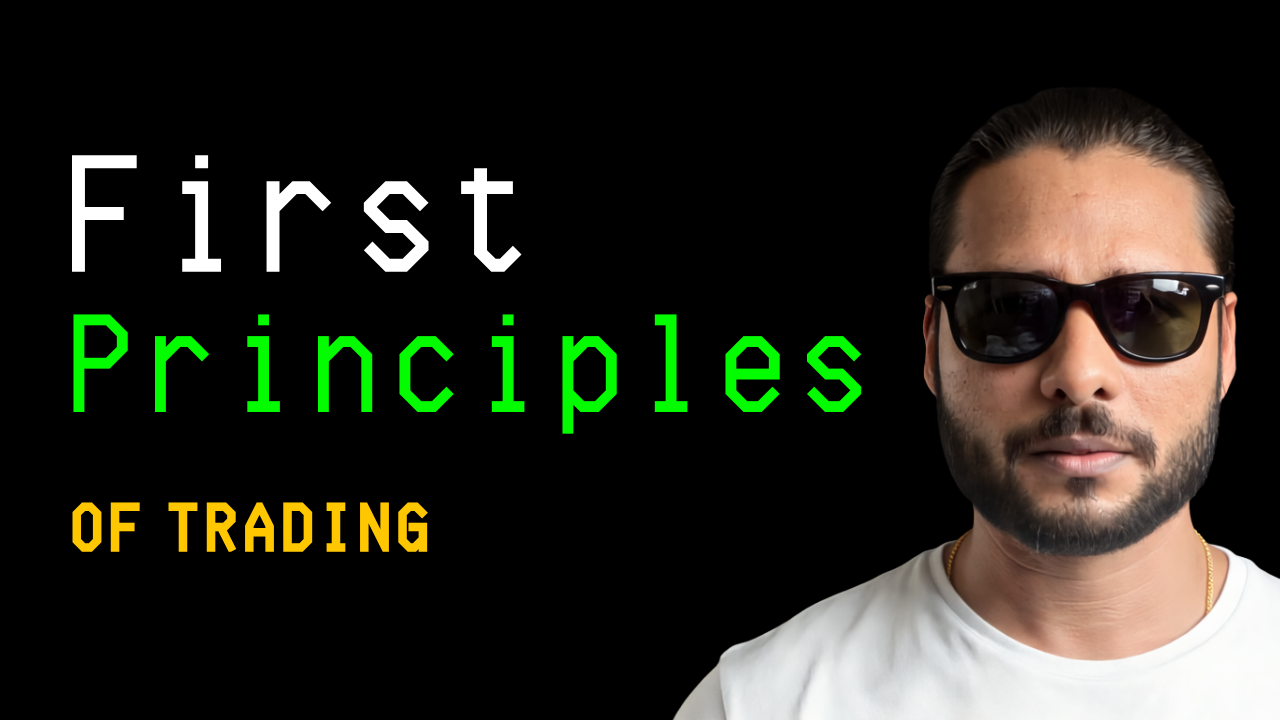
System R AI grew from six years of systematic trading research shared openly with thousands of traders. The same principles that shaped the operating system live in a free educational series.
Token Allocation
BME Emission (stakers 60%, ecosystem 30%, reserve 10%)30% (300M)
Ecosystem grants20% (200M)
Treasury (never sold for operations)12% (120M)
Presale ($500K cap, 4 weekly tiers)10% (100M)
Founder (1yr cliff, 4yr vest)7% (70M)
Co-Founder (1yr cliff, 4yr vest)7% (70M)
Investor A (6mo cliff, 2yr vest)5% (50M)
Liquidity (protocol owned, Raydium + Orca)5% (50M)
Investor B (6mo cliff, 2yr vest)3% (30M)
Future team (1yr cliff, 3yr vest)1% (10M)
77% protocol and community. 23% people. Community holds governance majority from day one.
Security and Integrity
Platform Security
13,241 tests across the entire platform. Every layer validated. Every edge case covered. Regression tested on every change.
Per-agent AES-256 encryption. Strategies, credentials, and wallet data encrypted at rest across all data paths. Only the owning agent can decrypt.
Complete audit trail. Every decision, every data point read, every check passed, every reasoning chain. When the regulator asks, the answer exists.
Hardware-signed operations. All mainnet transactions signed by hardware wallets. No private keys in code, cloud, or CI/CD. Zero custodial risk.
Protocol Security
1,348 lines Anchor/Rust across presale and vesting/escrow contracts. Minimal attack surface. 42 security findings identified pre-launch. All 42 remediated with documented commit hashes.
50/50 contract tests passing. Presale (37) and vesting/escrow (13). Boundary conditions, overflow guards, vault validation, geo attestation, buyer record integrity, vesting schedules.
Mint and freeze authority revoked. Irrevocable onchain operations. No entity can inflate supply or freeze balances. Verifiable by anyone.
Three-fund treasury separation. Operating fund in USDC only, survives any token price. Treasury never sold for operations. Time-locked transactions above $15K.
Compute Credit Settlement
Every platform operation is metered. Credits consumed at defined rates per operation type. Pricing governed by Pyth oracle with 400ms updates, circuit breakers, and staleness rejection. No estimated billing. Deterministic cost per execution cycle.
Roadmap
Milestone driven, not calendar driven. Each phase completes when its conditions are met, not when a deadline arrives.
1
Foundation, Launch, User Acquisition
The protocol goes live. Users and agents access the full platform from day one. User acquisition is the central objective from the first day of operations. The OSR token deploys on Solana mainnet. Presale opens. Liquidity pools launch on Raydium and Orca. The first real burns occur onchain. Staking activates. Paid acquisition campaigns and community building run in parallel with platform operations, driving signups to a live, functional product.
Complete when: Active users burning OSR daily, presale concluded, DEX liquidity established.
2
Traction, Ecosystem, Cross Chain
The protocol proves product market fit. Burn volume grows. Third party developers begin building agents on the platform. The ecosystem fund deploys grants to builders who create agents, integrations, and tooling. Cross chain agent operations begin: agents managing positions on other chains still burn OSR on Solana for intelligence, risk assessment, and execution planning. OSR becomes the settlement layer for agent operations regardless of which chain the agent operates on.
Complete when: Third party agents burning OSR independently, cross chain operations processing, 10+ external builder projects funded.
3
Self Governance, Proprietary Intelligence
The protocol becomes independent in two ways. Governance transfers fully to the community: the founder veto expires, all protocol parameters controlled by OSR holders through onchain voting. Proprietary intelligence emerges: the platform trains specialised models on thousands of real agent trading operations, producing financial market intelligence that only exists within the platform. These models become available exclusively through OSR burn.
Complete when: Governance operating independently, proprietary model live through OSR credits, intelligence differentiated from general purpose LLMs.
4
The New Frontier
The 10 layers that power trading agents are not unique to trading. Every industry involving financial decision making under uncertainty needs the same capabilities. The platform extends into adjacent domains: compliance, insurance underwriting, corporate treasury management, tokenised real estate. Each extension follows the same pattern: existing infrastructure, new domain data, accessible through OSR compute credits.
Complete when: At least two industries beyond trading have active agents burning OSR for domain specific operations.
The Raise
$1.8M total raise
$500K from token presale (non-dilutive, live on Solana mainnet). $1.3M from equity investors. Capital deployed toward platform adoption first. Token liquidity infrastructure follows as a function of user demand.
Use of Funds — By Priority
1. USER ACQUISITION AND GROWTH — $450K (25%)
Developer outreach and API adoption (MCP + SDK integrations). Community building across X, Telegram, and Solana ecosystem channels. Micro-KOL partnerships with Solana-focused creators. Conference presence including Breakpoint London 2026. Free compute credits to onboard first 1,000 agents. Referral incentive programme for early adopters.
2. PRODUCT AND ENGINEERING — $350K (19%)
Frontend build (chat-first web app for human traders). Escrow and vesting smart contract (built, 13 tests passing). SDK hardening and documentation (docs.systemr.ai live, 43 pages). Agent onboarding tooling. Mobile app preparation.
3. OPERATIONS AND TEAM — $250K (14%)
Core team compensation. Ecosystem event travel. Operational tooling. Strategic reserve for time-sensitive opportunities.
4. INFRASTRUCTURE — $150K (8%)
Cloud compute and LLM inference. Solana RPC and data feeds. Oracle infrastructure. 18 months provisioned.
5. LEGAL AND COMPLIANCE — $100K (6%)
Formal smart contract audit. Legal opinions on token classification. Entity maintenance (BVI + US). Regulatory counsel.
6. TOKEN DISTRIBUTION INFRASTRUCTURE — $300K (17%)
Exchange listings (DEX first, then 2 CEXs as user volume justifies). Market maker engagement (retainer model, 12 months). Protocol-owned liquidity provisioning on Raydium and Orca.
7. RESERVE — $200K (11%)
Unallocated buffer for emergent opportunities, additional exchange listings if demand warrants, and 6-month operating cushion beyond planned runway.
Capital Allocation Logic
44% goes to building the product and acquiring users. Users generate compute credit consumption. Consumption drives token burn. Token demand follows platform adoption, not the reverse.
17% goes to token distribution infrastructure. This is deployed after user traction validates demand, not before.
Token Presale (Live)
Hard cap$500,000
Allocation100M OSR (10%)
Min / Max per wallet$549 / $25,000
Week 1 price$0.00375 (25% off)
Base listing price$0.005
AcceptedSOL, USDC, USDT
Key Metrics
Pre-money valuation$10,000,000
Current monthly burn$15,000
Projected post-raise burn$75,000
Runway at full raise24+ months
First revenue target1,000 active agents
Let's build.
System R AI
INFRASTRUCTURE
For Humans
TRADING OS
For Agents
MCP + SDK
Documentation
43 PAGES
OSR Protocol
TOKEN
OPEN SOURCE